Space, Please: The Yellow Ribbon Is a Boundary, Not a Bad Attitude

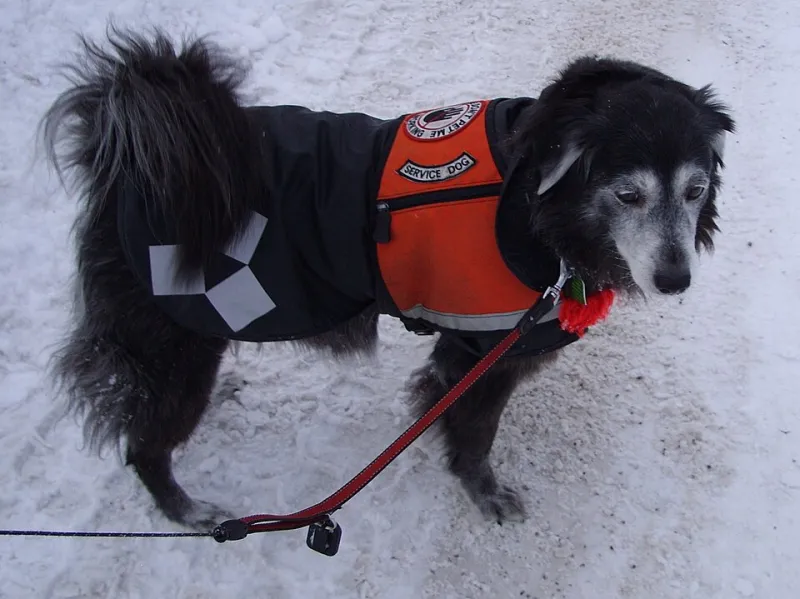
Photo: John Robert McPherson, CC BY-SA 4.0, via Wikimedia Commons
Walk into any busy UK park at 9am on a Saturday and you'll see a small piece of social infrastructure in action. A dog is on a short lead, maybe wearing a yellow ribbon, and the owner is steering a wide arc around everyone else. Sometimes people get it. Sometimes they don't.
The yellow ribbon is not a legal requirement, a warning sign or a label of shame. It's a request for space. And in 2026, with parks busier than ever, it's a request worth understanding.
What the ribbon actually means
A yellow ribbon, bandana or lead slip is a visual shorthand. It usually means one or more of the following: the dog is nervous, reactive, in training, recovering from illness or surgery, elderly, or simply not comfortable with strange dogs in their face.
It does not mean the dog is aggressive. It does not mean the owner is unfriendly. It definitely does not mean you should ask 'is he friendly?' while your own dog strains towards them at the end of a lead. The ribbon is not a full biography. It's a boundary.
The short lead is information, too
A dog on a short lead in a busy park is being managed. That might be because of recall, traffic, livestock, another dog, a child, or simply because the owner wants control in a crowded space. It is not an invitation to let your dog rush over 'to say hello'.
If your dog has a solid recall, brilliant. Use it. If not, a long line in busy areas is not a failure; it's basic courtesy. Nobody is impressed by a dog who ignores recall while an owner shouts its name across the cricket pitch.
How to signal space politely
If your dog needs room, say so early. A yellow ribbon is useful, but it is not universally known. A simple phrase does the job: 'He needs a bit of space, thanks.' Say it before the other dog arrives, not after the sniffing has started.
Body language helps too. Step off the path, put your dog behind you, create a physical gap. If someone approaches anyway, you don't have to stand there explaining your dog's entire history. Repeat the request and move away. That is not rude. That is advocacy.
When you see a yellow ribbon
Recall your dog, reward them, and give a wide berth. Don't comment, don't judge and don't take it personally. If you have children with you, explain that some dogs need space and that we don't approach dogs we don't know without asking.
If you're on a shared path, move to the side and keep your lead short. If your dog is off lead and won't come back, that's your cue to work on recall or use a long line. The yellow ribbon is not asking for a debate. It's asking for a bit of room.
Advocate without apologising
There's a particular British habit of saying sorry for having a dog that needs space. 'Sorry, he's a bit funny,' we say, as if the dog is committing a social faux pas. It's understandable, but it's not helpful.
Try instead: 'We're training, so we'll keep our distance.' Or: 'He needs space, thanks.' You don't owe anyone a diagnosis. You are allowed to protect your dog without offering a full explanation or an apology.
If someone ignores your boundary, leave. You don't have to win the conversation. A brisk walk in the other direction is a perfectly valid training decision.
When to bring in help
If every walk is a stressy game of dodge-the-dog, it's worth getting support. A qualified trainer or behaviourist can help with reactivity, confidence and lead skills. Look for someone who uses kind, evidence-based methods and who is happy to work at your dog's pace.
If your dog's behaviour has changed suddenly, see your vet first. Pain, thyroid issues and other medical problems can show up as reactivity. Training alone won't fix a sore tooth or aching joints.
A local dog walker can also be part of the plan. Ask whether they offer solo walks, whether they understand yellow-ribbon dogs and how they handle chance encounters. A good walker will respect the brief rather than promising to 'socialise' a dog who doesn't want it.
Space is a kindness
The yellow ribbon is a small piece of visual language. It says: my dog is doing their best, and so am I. You don't need to know the backstory. You just need to give a bit of room.
In busy parks, that small courtesy goes a long way. So if you see a yellow ribbon, nod, shorten your lead and carry on. It's not a bad attitude. It's a boundary. And boundaries are what make shared spaces work.