Six Weeks to Midnight: A Fireworks Plan for Dogs Who've Had Enough of November

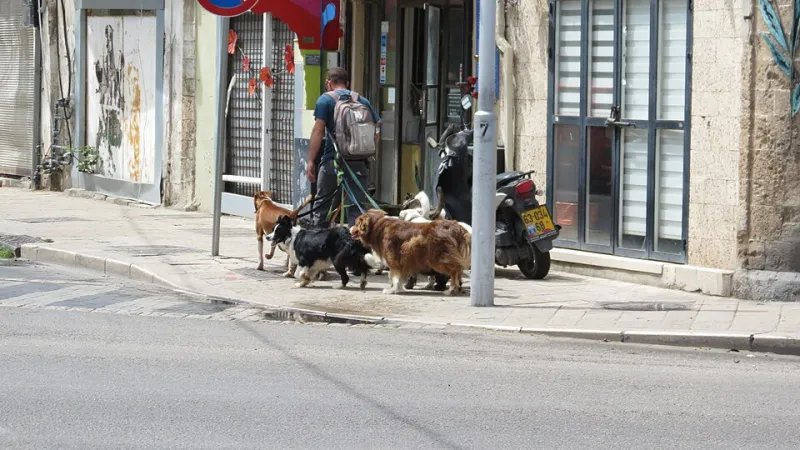
Photo: Sanjay ach, CC BY-SA 3.0, via Wikimedia Commons
Bonfire Night has been and gone. The toffee apples are finished, the bin is full of sparkler wire, and your dog has finally stopped pacing between the sofa and the front door. Job done, surely?
Not quite. In most of the UK the noise doesn't politely stop on 5 November. There are Diwali displays, weddings, birthday parties, pub gardens, football results, and a long tail of private fireworks that dribbles right through December. Then New Year's Eve arrives — which for a nervous dog is Bonfire Night all over again, except it happens at midnight, and you may have had a glass of something.
The good news is that you have roughly seven and a half weeks between now and the bells. That is plenty of time to do proper, gentle preparation instead of panic-buying a thunder shirt on 30 December.
First, learn your dog's stress language
Before you plan anything, get fluent in the early warnings. Most dogs tell you they're uneasy long before they're terrified, and catching it early is the whole game.
Watch for yawning when they're not tired, lip-licking with no food around, ears pinned back, panting in a cold room, refusal of a favourite treat, freezing on the spot, shadow-pacing, tail tucked tight, sudden hiding behind furniture, and toileting indoors in a dog who has been clean for years. Some dogs go the other way entirely and get clingy or demand attention.
Write down what you see. A note on your phone is fine. In six weeks you'll want to compare, and you'll be surprised how much you forget.
Week 1 (7–13 November): build the bolthole
Pick the spot your dog already gravitates to — the corner behind the armchair, under the stairs, the back of the utility room — and make it better. A covered crate with the door removed, a draped blanket over a table, a bed wedged into a quiet corner. The key word is choice: the dog must be able to get in and out freely.
Add a worn t-shirt of yours, and keep food and water nearby but not inside. Never drag your dog out of it to prove a point, and never shut them in. A safe space they can't leave is not a safe space.
Week 2 (14–20 November): the quietest possible bangs
Download or stream a fireworks sound recording — Dogs Trust, the RSPCA and various behaviourists publish free ones, and there are decent playlists on streaming services. Play it at a volume so low it's barely audible under normal conversation.
Sessions should be five to ten minutes, two or three times a day, paired with something genuinely good: a stuffed Kong, a lick mat, a puzzle feeder. The golden rule is simple — if your dog stops eating, the volume is too high. Turn it down, not up.
Week 3 (21–27 November): turn it up, change the room
Once your dog is relaxed at low volume, nudge it up in small steps. Then start varying the conditions: play it in a different room, with a door open, during mealtimes, and while someone rings the doorbell.
What you must not do is run sessions when your dog is home alone or just before a walk. This works because good things happen alongside the noise, and you need to be there for that.
Week 4 (28 November – 4 December): audit your walk routes
Now go outside. Walk your usual loops at the times you normally go and note where noise travels — the recreation ground, the cricket club, the hotel with the big garden, anywhere a marquee goes up in December.
Check parish council websites, local Facebook groups and venue notice boards for advertised displays. Most are posted weeks ahead. Then build a quiet-route map: back lanes, the canal towpath, the industrial estate on a Sunday, the woods where sound deadens.
Shift the routine: a long, sniff-heavy walk in the late afternoon while it's still light, and a short garden trip for the toilet after dark. Sniffing lowers arousal, so let them stop and read the news for as long as they like.
Week 5 (5–11 December): rehearse the night
Don't wait for 31 December to test your setup. Pick an ordinary Tuesday, shut the curtains, put the radio on low (a speech station is better than one with jingles and adverts), dim the lights, hand over a long-lasting chew, and sit down.
Do this two or three times over the week. If something doesn't work — the chew is too small, the radio is too loud, the room is too hot — you've found out in good time.
Week 6 (12–18 December): the dry run
Play the sounds of the actual night: Big Ben, cheering crowds, the countdown, a few big bangs at the end. Keep it short and keep the treats coming. Also check the boring-but-vital things now: the microchip details are up to date, the collar tag is legible, and the garden gate actually latches.
Christmas week (19–25 December): protect the routine
Visitors, doorbells and wrapping paper are their own kind of stress. Keep walks at familiar times, give your dog somewhere to escape to when the house fills up, and ask guests not to loom over the dog or force fuss. Nothing here is about fireworks, but a dog who's already wound up on Boxing Day has less in the tank for the following week.
The final stretch (26–31 December)
Ease off the training. You're not teaching anything new now, just holding the routine steady. Confirm what's happening locally, warn the neighbours if they're planning a garden display, and keep your dog out of the garden after about 4pm from the 29th onwards.
On the night: last proper walk before dark, dinner a little earlier and a little lighter, curtains closed, radio on, chew available, and you present and calm. If a bang goes off and your dog bolts to their bolthole, let them. Don't coax, don't pick them up unless they ask, and absolutely don't tell them off. Frightened dogs aren't being naughty.
If you have to go out, book a sitter. New Year's Eve is the one night of the year when I'd genuinely say don't leave a sound-sensitive dog alone.
When to speak to your vet
Ring the practice if your dog stops eating for a day, injures themselves trying to get out, can't settle for 24 hours after an event, or is getting worse despite six weeks of patient work. Previous severe reactions are also worth a conversation — some dogs simply need more support than training alone can give.
Ask about a referral to an ABTC-registered clinical animal behaviourist, and be open-minded about medication. It is not a failure and it is not a sedative; it is a tool that lets the training work. Importantly, some options need weeks to build up in the system, which is exactly why late November and early December are the right time to ask — not 31 December.
A last word
You will not make your dog bombproof in seven weeks, and you don't need to. What you can do is build a reliable safe space, teach your dog that bangs predict good things, know exactly where to walk, and have a calm plan for the night. That's a far better New Year's Eve than one spent under a duvet with a shaking dog and a lot of regret.