Teach the Kerb, Not the Come: A Roadside Check-In That Survives Real Traffic
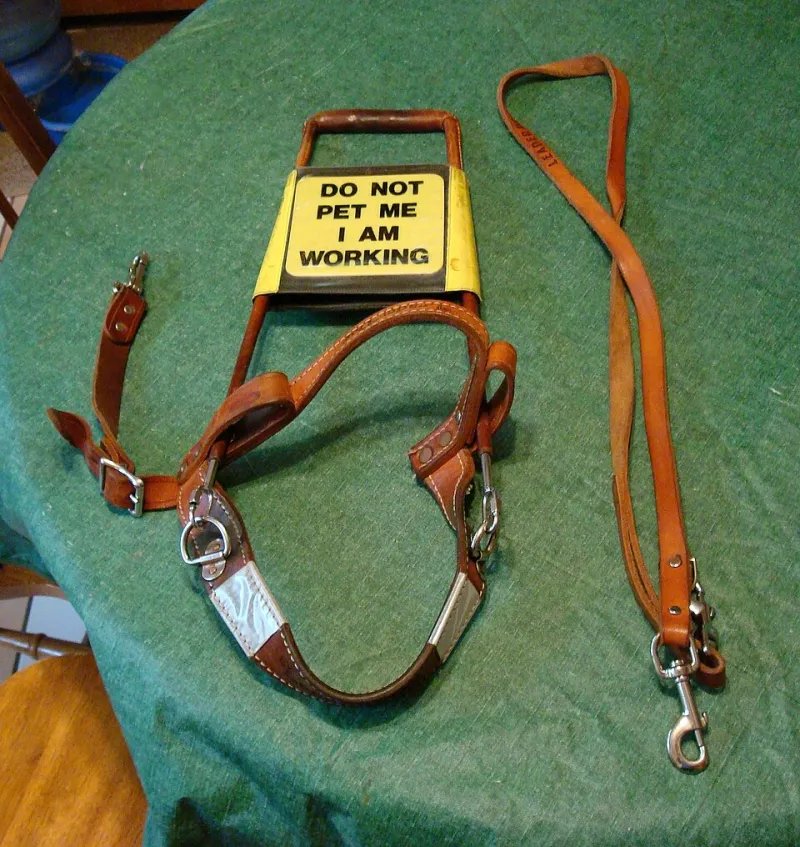
Photo: Hurricane Omega at English Wikipedia, Public domain, via Wikimedia Commons
You know the moment. Lead in one hand, poo bag in the other, approaching the kerb, and your dog is already leaning into the road like a husky at the start line. You say their name. Nothing. You say it again, slightly higher. Still nothing. The word "come" has become background noise.
This isn't a disobedience problem, and it isn't solved by saying the word louder. Near roads, most dogs aren't refusing a cue — they're not hearing it at all. What follows is a drill that teaches a different behaviour entirely, one that doesn't rely on your dog deciding to be obedient at the exact moment a squirrel, a bus and a chip wrapper compete for attention.
Why ordinary recall falls apart by the kerb
Recall is a cue. Cues are only as strong as the context they've been practised in. If your dog has learned "come" across a muddy field with nothing much happening, that's precisely where it works. Put them on a pavement with a scooter coming and the same word arrives as one small sound in a very loud world.
There's a second issue: reinforcement history. In the park, coming back pays — treats, praise, another go. At the kerb, coming back often ends the fun, because it means stopping, waiting, and then being steered across a road that smells of interesting things. So dogs learn, quite rationally, that the kerb cue predicts a boring interruption.
What you're actually building instead
Not a sprint back to you. A pause. Stationing.
The behaviour you want is: dog reaches the kerb, stops, turns to check in with you, waits. That's it. You then reward it. Repeat it a few thousand times, over months, on quiet streets, and it starts to happen before you've asked.
Call it the check-in, or the kerb stop, or whatever lands in your head at seven in the morning. Just don't call it "come", because you need that word to keep working elsewhere.
Kit and ground rules
- A well-fitted harness or flat collar and a fixed lead for street work
- A long line for the drive and park stages — never a retractable lead
- Small, high-value food (cheese, cooked chicken, whatever your dog would follow up a ladder for)
- A quiet residential street with clear kerbs, ideally a cul-de-sac or a road with a raised crossing
And three rules you don't break: never practise this off-lead near live traffic, always practise on the same side of the dog (choose one and stick to it), and keep sessions under five minutes.
Stage 1: the hallway kerb
Put a strip of tape across the hallway floor. Walk towards it with your dog on lead, and as their nose reaches the tape, stop dead, say nothing, and wait. Most dogs will look up at you, purely because you've stopped and they've lost their forward momentum. The instant they look, mark it ("yes") and feed. Then step over and continue.
Repeat five times, twice a day, for a week. The aim is a dog who offers the look-up without you prompting. That pause and glance is the whole behaviour. Everything else is adding distractions.
Stage 2: your own drive or garden gate
Same drill, bigger context. This time the stop point is your drive, and the reward is the thing your dog actually wants: continuing the walk. Use the environment as the treat, not just the chicken. Reaching the kerb, checking in, then getting to move off is genuinely reinforcing for most dogs.
Stage 3: the bus stop
Bus stops are perfect UK landmarks because they involve exactly the thing you can't control — vehicles arriving and leaving, people appearing, doors beeping. Find one on a quiet road and sit or stand a few metres away with your dog in a relaxed settle. Feed for calm. Then walk past it. Then approach it as a stop point and practise the kerb check-in with the bus as background noise.
Don't add prediction yet. You want the dog to notice that buses happen and nothing terrible follows. That takes several weeks of unremarkable repetition.
Stage 4: junction corners and park exits
Park exits are the classic escape route, and corners are where sightlines disappear. Practise the check-in at both: stop before the gate, wait for the look, then release. Do it at the same gate every day until it's boring, then swap to a different gate, then a different park.
The three-second rule
Once the stop is reliable on a quiet street, introduce a short wait. Stop at the kerb, get the check-in, then count three seconds before you move. Extend it slowly. Never use the wait as a punishment or a test — if you lose the dog's attention, shorten the wait and rebuild.
Some owners find it useful to pair the stop with a hand target: palm out, low, near the thigh. It gives the dog a job and gives you something to do other than repeating a word that's stopped working.
Safety notes that aren't optional
- The Highway Code advises keeping dogs on a lead on roads and near traffic. Follow it.
- Lead length on a pavement is a safety issue, not a training preference. Keep it short at the kerb.
- If your dog is a known bolter, or has escaped before, work with a professional before you attempt street drills. A long line is not a licence to relax.
- Never practise near moving traffic to "test" progress. You're not testing; you're rehearsing a habit.
- If your dog is anxious around vehicles, this drill isn't the starting point. That's a behaviour plan.
When to call in a local trainer
Book a session, or ask your vet for a referral, if any of these sound familiar: your dog has slipped a collar or lead; you're physically unable to hold them at a kerb; there's lunging and barking at traffic; you've had a near miss. Look for someone accredited by a recognised UK body — the Association of Pet Dog Trainers, the Institute of Modern Dog Trainers, or an instructor running Kennel Club Good Citizen sessions locally. A good trainer will want to see the two of you on the street, not just talk to you in a hall.
The five-minute version
Walk the same quiet route daily. Stop at every kerb, wait for the look, feed, continue. Five minutes in the morning, five in the evening. It's not glamorous, and it will feel pointless for the first fortnight.
Then one morning you'll be halfway into your own thoughts at a crossing, and your dog will stop, sit, and look up at you before you've said a word. That's the kerb doing the work — which is exactly what you want, because on the day you're distracted, tired or juggling shopping bags, the kerb will still be there.