Mat, Lead, Treat, Repeat: The Front-Door Routine That Stops the Dash
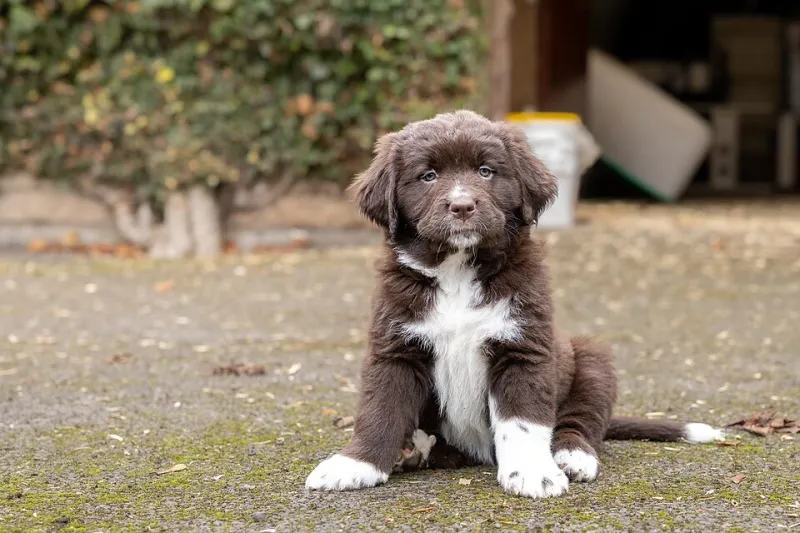
Photo: Sharon Byrne Photography, CC BY-SA 4.0, via Wikimedia Commons
The front door is the most exciting square metre of most UK homes. It is where the post lands, where the takeaway arrives, where the bin lorry clatters past and where next-door's parcel gets left with you because they are out. For a dog, every one of those moments is a small event with a big soundtrack.
So when your dog charges the door, it is rarely about defiance. It is usually about rehearsal. The door opens, something exciting happens, and the dog has learned that being fast and close is the best way to join in. The good news is that the same principle works in reverse. A short, repeatable routine can teach a calmer response without turning your hallway into a military parade ground.
Why the hallway is the hardest room in the house
Hallways are narrow, echoey and full of triggers. In a flat, you may have an intercom, a communal corridor and a neighbour who comes home at exactly the wrong moment. In a terrace, the front door can open almost straight onto the pavement, so there is no buffer between your dog and the street. In a shared building, one buzzer panel can serve four flats and a stream of couriers who all press the wrong one.
That is why door-dashing is so common. The dog is not being naughty; they are responding to a doorway that keeps producing surprises. The aim of this drill is not to make your dog ignore the door forever. It is to give them a predictable place to be while the door does its thing.
The kit: mat, lead, treats
You need three things and none of them are expensive. A mat can be a bath mat, a vet bed or a folded towel, as long as it is easy to tell apart from the floor. A lead is for safety, not punishment. In the early stages, it stops a dash becoming a dash into the road, especially in terraces and flats where the front door leads to a shared or public space. Treats should be small, smelly and easy to eat quickly.
The lead is not there to drag your dog back. It is there so you can practise with the door open without your heart rate going through the roof. If your dog is worried by the lead, spend a few days pairing it with treats before you start the door work.
The five-minute drill
Do this twice a day, or once if your dog finds it hard. Five minutes is not a warm-up; it is the whole session. Stop while your dog is still succeeding.
Minute one: make the mat the best place in the room
Put the mat a couple of metres back from the door, away from the swing of it. Toss a treat onto the mat and let your dog find it. Repeat a few times. If your dog offers a sit or a down on the mat, reward it, but do not demand it. The mat should mean good things happen, not that a formal obedience exercise has begun.
Minute two: lead on, lead off
Clip the lead on, give a treat, unclip it. Repeat. This sounds almost too simple, but it takes the sting out of the lead appearing. Many dogs only see the lead when a walk is about to happen, so it becomes rocket fuel. In this drill, the lead becomes part of the hallway furniture.
Minute three: doorbell or knock, no door
Make a single knock or use a doorbell sound on your phone at low volume. Then immediately toss a treat onto the mat. Do not open the door. Repeat two or three times. If your dog barks, that is information, not failure. Make the sound quieter or move the mat further away.
Minute four: the door opens an inch
With your dog on the lead, put your hand on the handle. Open the door an inch, close it, then treat on the mat. Build up to a few inches. If your dog breaks from the mat, close the door, reset and make it easier. The door closing is not a punishment; it is simply the end of that repetition.
Minute five: a friendly rehearsal
If you can, ask a friend or neighbour to knock from outside. Open the door a little, toss a treat onto the mat, close the door and reward. Keep the greeting calm and short. You are teaching a sequence: noise, mat, treat, door. Repeat until the five minutes are up, then stop, even if it is going well.
When the real van arrives
Real life will not wait for a training session. If a courier knocks unexpectedly, put the lead on if you need to, send your dog to the mat or scatter a few treats on it, and open the door with your body between the dog and the gap. In a flat, step into the hallway only when the dog is secure. In a terrace, keep the lead on until the door is closed again.
Do not use a real delivery as a test. The driver does not want to be part of your training plan, and your dog does not need the pressure. Practise with a friend, then let real life be easier because the rehearsal has already happened.
Flats, terraces and shared front doors
In a flat, work inside your own front door first. The communal corridor is not your training ground, and it is not fair on neighbours to have a dog rehearsing at their door. If your intercom is the trigger, practise with the sound at low volume and reward your dog for looking back at you. When you answer a real buzzer, keep the dog on the lead and use the mat just inside the flat.
In a terrace, the pavement is right there. That makes the lead non-negotiable in the early stages. Practise opening the door with the dog behind you, reward on the mat, then close it. If bin day is the trigger, start the drill before the lorry arrives rather than in the middle of the clatter. A few treats scattered on the mat can carry you through the noise.
In a shared building, coordinate with neighbours if you can. Ask them not to knock and run for a week while you practise. Keep the mat inside your flat, not in a shared hallway where it could trip someone or block a fire exit. If several buzzers set your dog off, reward every check-in with you, even if the door is not opening.
Five minutes is the point
This drill works because it is short, boring and repeatable. It does not need a lecture, a special harness or a whole afternoon. It needs a mat that smells of treats, a lead that means nothing dramatic, and a door that opens and closes without a dog shooting through it.
The door will always be interesting. Your job is not to make it dull. Your job is to make the mat a better bet than the pavement.