Festive Forkfuls: Building a Christmas Dinner Plate Your Dog Can Actually Share
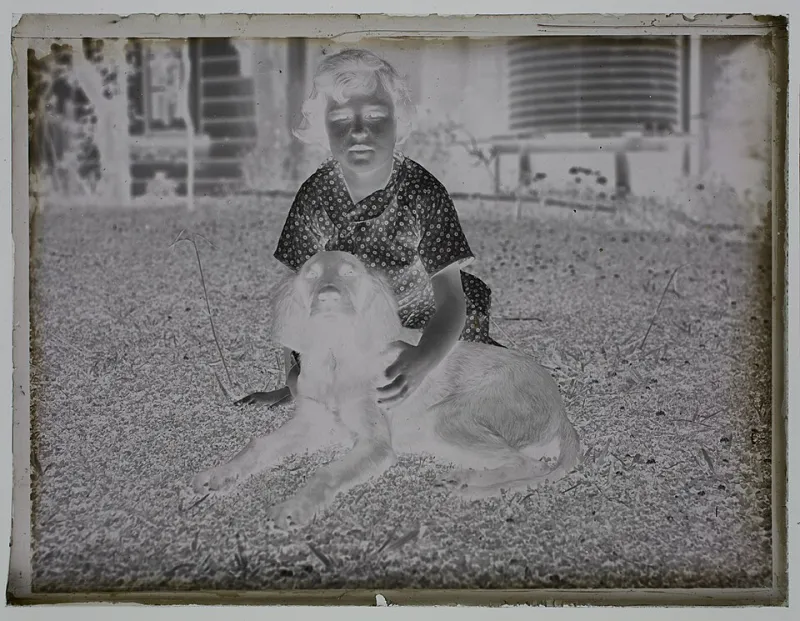
Photo: Collins, Tudor Washington, 1898-1970, photographer, CC BY 4.0, via Wikimedia Commons
Every December the same warning goes round: don't give the dog chocolate. Excellent advice. Slightly beside the point. In a typical British kitchen on the twenty-fifth, the chocolate is sealed in an advent calendar on a high shelf, while the genuinely dangerous stuff — onions, raisins, alcohol, a pan of hot fat — is sitting at floor level in open containers.
The real risk on Christmas Day isn't the dog being handed a treat. It's the dog helping themselves while twelve people are distracted by a Yorkshire pudding debate.
The principle: plain, small, unseasoned
If you remember one rule, make it this one. Anything that goes on the dog's plate should be unseasoned, unbuttered, un-sauced, cooked plainly, and no bigger than a couple of tablespoons in total. Christmas dinner is enormously rich by dog standards — even the safe bits add up fast, and a dog who's had a bit of everything tends to spend Boxing Day on the back lawn looking sorry for themselves.
Think of it as a taste of dinner, not a portion of it.
What can go on the plate
- Turkey breast — white meat, no skin, no bone, no stuffing contact. Skin is the fattiest part and the usual culprit behind a night of pancreatitis worries.
- Plain carrot and parsnip — steamed or boiled, no honey glaze, no butter.
- Green beans and peas — plain, and only a few.
- Plain mashed or boiled potato — a small spoonful, no butter, no salt, no milk if your dog is sensitive.
- A little cooked salmon or white fish — as long as it's plain and boneless.
That's a decent plate. It looks a bit sad next to yours, but the dog doesn't know that. The dog has been given a plate at the table. As far as they're concerned, they've won Christmas.
What to skip, and why
- Onions, garlic, leeks, shallots — in the gravy, the stuffing, the roast veg, the sauce. All alliums are toxic to dogs and the damage builds over a day of small helpings.
- Raisins, sultanas and currants — Christmas pudding, mince pies, Christmas cake, the fruit in the stuffing. Grapes and their dried forms can cause kidney injury, and there's no reliable safe dose.
- Stuffing and gravy — almost always both of the above, plus salt and fat.
- Pigs in blankets — far too much salt and fat for most dogs, and the sausagemeat is often seasoned with onion.
- Cooked bones — turkey and chicken bones splinter. Never, no matter what your gran says about her childhood dog.
- Christmas pudding and brandy butter — raisins plus alcohol plus fat. A genuine emergency in a bowl.
- Cheese, especially blue — a small piece of cheddar is fine for many dogs; blue cheese is a different matter entirely.
- Macadamia nuts, chocolate, mincemeat, marzipan, xylitol — the last one hides in sugar-free sweets and chewing gum, and it's one of the fastest-acting poisons we have.
- Alcohol — including the dregs in a glass left on the floor, which is how most dogs get it.
The counter-surfing problem, solved for one day only
Rather than spend the day shouting "down" at a dog who has never once been allowed on the counter but has now smelled eighteen hours of roasting, manage the environment instead.
- Put the dog out of the kitchen before the hot fat comes out of the oven, not after.
- Use a stair gate or a closed door rather than willpower. Willpower is in short supply on Christmas Day.
- Clear the plates the moment people finish — the gap between "finished eating" and "plates stacked" is the danger window.
- Put the bin behind a closed door and take the turkey carcass out to the wheelie bin straight away.
- Keep chocolate, selection boxes and advent calendars off low tables and out of reach of a determined nose.
If your dog does counter-surf, this is also a good week to drill a solid "leave it" — not as a Christmas-morning rescue, but as a habit built up over the autumn. A dog who'll drop and walk away on cue gives you five seconds to grab the plate.
Signs that mean ring the vet, not wait and see
Most Christmas Day stomach upsets are just that — an upset. But some things don't wait, and the pattern matters more than any single symptom.
Call your vet — or the out-of-hours service — straight away if you see:
- Suspected raisin, chocolate, xylitol or onion ingestion (even a small amount, and even if the dog seems fine)
- Vomiting that won't stop, or repeated attempts with nothing coming up
- A hard, swollen, painful belly, particularly in a deep-chested dog
- Restlessness, pacing, drooling or a dog who can't get comfortable
- Trembling, wobbling, twitching or collapse
- Any blood in vomit or stools
Don't wait for symptoms to develop after a known ingestion — that's the one situation where "let's see how they go" is the wrong instinct. Have your vet's number and the out-of-hours number written down before the twenty-fifth, not searched for at eleven at night.
Five minutes of prep on Christmas Eve
Write the out-of-hours number on the fridge. Decide which family member is on dog-watch during dinner. Set aside a small plain portion of turkey before the gravy goes anywhere near it. And brief the guests — the auntie who slips the dog a mince pie is a tradition in every family, and she'll do it with the best intentions in the world.
Get those five minutes done and the rest of the day looks after itself. Which is roughly the standard we're aiming for.