Paw Rinse, Towel, Comb: The Doorway Groom That Beats a British Winter
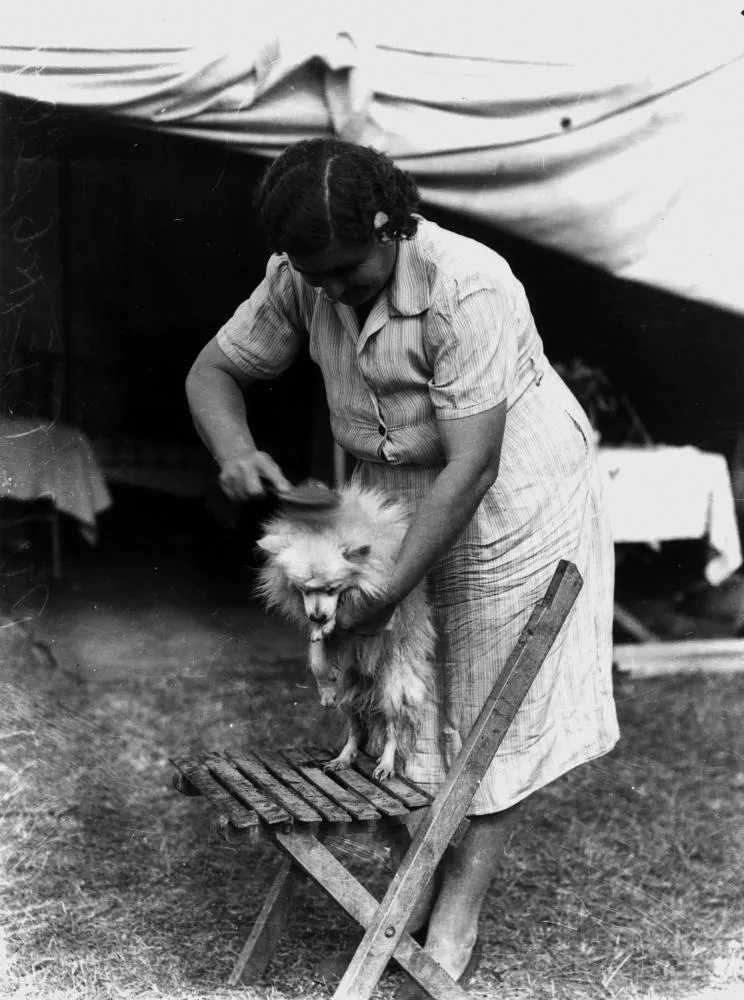
Photo: Nance Pomerene, CC BY-SA 4.0, via Wikimedia Commons
There's a particular kind of British winter walk that ends with a dog wearing half the pavement. You know the one: dark by half four, a fine drizzle that isn't quite rain, and a crust of grit along the kerb that finds its way into every paw crevice and up every leg feather. You get home, the door shuts, and the floor becomes a swamp.
The instinct is to reach for the full grooming kit — the table, the clippers, the twelve-brush collection in the cupboard under the stairs. Don't. Winter grooming isn't a Sunday project. It's a ninety-second habit, repeated after every walk, using a handful of things you can grab without taking your coat off.
The grit problem nobody warns you about
Rock salt is abrasive. It's also drying, and it doesn't just sit on the surface of a pad — it wedges into the little gaps between the pads and the fur between the toes, where it stays warm and damp and starts to sting. By the time your dog is licking at a paw at ten at night, the irritation has been brewing for hours.
So the first piece of kit isn't a brush. It's a small plastic jug or a squeezy bottle of lukewarm water, kept by the door alongside a stack of old towels. Not freezing, not hot — tepid. Cold water on a pad that's already sore is a good way to teach a dog that having their feet handled is a bad experience.
Stand the dog on a towel, pour the water over one paw at a time, and work your fingers gently between the pads. If your dog has feathering or a thick tufty foot, you'll find grit has travelled a good centimetre up. That's normal. Better out now than grinding away inside a boot.
Some dogs will tolerate this straight away. Others will act as if you've asked them to walk the plank. Start with one paw and a treat, even if you only manage a rinse and not a full clean. Two paws a night rather than four done badly is fine.
Towels, drying coats and the great debate
Here's where people overspend. A microfibre towel does the same job as the fancy one with the hood and the embroidered paw print, and it dries faster between walks — which matters when you're doing this three times a day in February.
Drying coats are genuinely useful for a specific job: a wet, cold dog who has to sit in a car, or a thin-coated breed who shivers before you've found the second towel. They're not a substitute for towelling off. Think of them as a jacket, not a dryer.
The thing most people miss is the order of operations. Towel the legs and belly first, then the back, then the head. Why? Because a dog shakes roughly every forty seconds while you're drying them, and if you've started at the head, everything you've just dried gets redecorated.
And a word on the double-coated dogs — the retrievers, the shepherds, the husky crosses. Do not rub vigorously against the lie of the coat. You'll push the undercoat into the topcoat and build a felt pad on the rump that you'll be fighting for weeks. Blot and squeegee with a flat hand in the direction the hair grows.
Brushing is not optional in November
A wet coat that's left to dry in clumps is a mat waiting to happen. Add a harness rubbing across the shoulders and you've got two of them.
The routine that actually works: five minutes, three times a week, plus a quick once-over on any walk where your dog got properly soaked. Line brush rather than surface brush — part the coat down to the skin in sections and work from the roots out, especially behind the ears, under the front legs and around the tail set. Those are the three places mats start and the three places nobody looks until they're solid.
You need one decent slicker brush, one metal comb with rotating teeth, and a detangling spray if your dog has a coat that clumps. That's it. The comb is the honest one — if it won't glide through, there's a knot you haven't found yet.
Mats aren't just a cosmetic issue. They trap moisture against the skin, they pull, and a tight one behind an ear or under a leg can hide a hot spot until it's weeping. If you find a solid mat, don't attack it with scissors. Skin moves, and dogs flinch. Either work it out patiently with a detangler over a couple of sessions, or hand it to a professional.
What's worth buying, and what isn't
Genuinely useful: a squeezy bottle, three cheap microfibre towels, a slicker brush, a metal comb, a pot of paw balm for cracked pads, and a shallow plastic tub if your dog is small enough to stand in one.
Not worth the money: electric paw washers that froth and frighten, grooming gloves that skim the surface and do nothing underneath, and any 'self-cleaning' brush where the mechanism jams the first time it meets a real winter coat. Aromatic paw sprays are usually more about the owner's nose than the dog's comfort — and plenty of dogs dislike the smell more than they dislike the mud.
Coconut oil is fine as a light soother, but if your dog is a dedicated paw-licker, skip the balm and get the pad checked instead. Constant licking is a symptom, not a habit.
Book the groomer now, not in December
Every groomer in the country is fully booked from about the second week of December. If your dog needs a proper strip, a tidy-up, or a coat that's already past the point of home brushing, ring this week. Late November appointments are still findable; the week before Christmas, you'll be ringing round.
Ask specifically for a winter tidy rather than a full groom if that's all you need — paws, hygiene areas, and a check behind the ears. It's cheaper, quicker, and it's the bits that actually cause trouble over the wet months. If your dog is nervous about the drier, say so when you book. Good groomers will work around it; the ones who won't are worth knowing about before you hand over the lead.
One last thing. Keep the whole kit in a basket by the door, not in a cupboard. Anything that takes thirty seconds to find is a routine. Anything that takes two minutes is a thing you'll skip on a wet Tuesday — and wet Tuesdays are exactly when it matters.