Less Pavement, More Postcode: The Case for a Sniff-First Walk
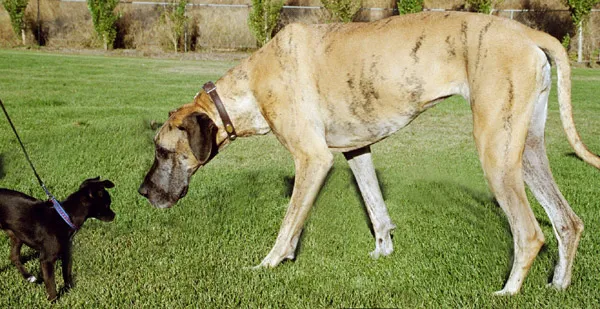
Photo: Elf at English Wikipedia, CC BY-SA 3.0, via Wikimedia Commons
There is a certain kind of dog walk that looks brilliant from the outside. The lead is taut, the pace is brisk, the route is a tidy loop and the step count at the end is deeply satisfying. It is the walk that gets scheduled between a supermarket delivery and a video call, and it is the one many of us default to when the days are short and the weather is doing its November best.
But step count is a human measure. Dogs do not experience a walk as a series of metres covered. They experience it as a stream of information: who has been here, what changed since yesterday, whether that lamp post smells like the spaniel from number 14, and whether the grass verge is worth a proper investigation. A twenty-minute walk with plenty of sniffing can do more for some dogs than an hour of pavement pounding. That is not a rejection of exercise. It is an argument for spending the walk budget more carefully.
The step-count trap
Most of us have been trained to think of a walk in terms of length. Longer is better, faster is fitter, and a dog who comes home tired must have had a good time. Sometimes that is true. A young, fit dog with a safe off-lead area may genuinely need to run. But for many dogs living in UK towns and cities, the problem is not a shortage of steps. It is a surplus of stimulation.
Traffic, scooters, school runs, café tables, other dogs, discarded chips and the constant stop-start of pavement walking all add up. A dog can walk for an hour and come home more wired than when they left, because they have spent the whole time scanning, dodging and trying to process a busy environment. The walk was long, but it was not decompressing.
What a sniff budget actually is
A sniff budget is not a scientific formula. It is a practical way of auditing where the value in a walk comes from. Instead of asking how far you went, ask how much of the walk your dog spent doing dog things: sniffing a patch of grass, choosing a direction where it was safe to choose, pausing at a kerb, reading a wall, or investigating a smell that means nothing to you and everything to them.
For a twenty-minute local walk, a rough split might be ten minutes of sniffing and mooching, five minutes of steady walking and five minutes of choice and pauses. For a dog who finds the world overwhelming, the sniffing share might be even higher. For a dog who needs to stretch their legs, you might add a faster section or a safe off-lead run. The point is not to ban brisk walking. It is to stop treating sniffing as the bit that happens when the dog is being slow.
Audit your usual route
Pick the loop you walk most often and look at it with different eyes. Count how many times your dog stops to sniff for more than three seconds. Notice how often they look back at you, yawn, lip-lick or scan the horizon. Note the busy junctions, the blind corners, the school-run pavements and the places where you have to walk in single file. Then look for the quieter parallel street, the churchyard edge, the grass strip behind the car park or the alley that leads to a pocket park.
You are not looking for a dramatic new route. You are looking for a better twenty minutes. A sniff-friendly walk might use the same postcode but a different rhythm. It might mean crossing the road to avoid a barking dog behind a gate, or walking on the park side of the pavement so there is a buffer from traffic. It might mean driving five minutes to a quieter green rather than doing the same stressful high street loop.
Dark evenings and busy pavements
The clocks have gone back, and by late afternoon many UK pavements are lit by shop windows and headlights. Darkness does not have to mean abandoning sniffing. It means choosing where you do it. A well-lit park edge, a residential street with wide verges or a safe grass patch near home can still offer plenty to investigate. A reflective lead, a light on the collar and a torch are not glamorous, but they make the slower walk possible.
On busy pavements, be realistic. If your dog is stopping to sniff every lamp post on a narrow high street at 8.30am, you are both going to have a frustrating time. Walk the busy section at a steady pace, then give the sniff budget proper space once you reach a quieter patch. Sniffing is not a licence to block a pavement or step into a road. Safety comes first, especially in the dark.
Why slower walks help restless dogs
A dog who pulls, scans, barks at everything and cannot settle at home is often described as needing more exercise. Sometimes they do. But quite often they need less noise and more agency. Sniffing is calming. It is a way of gathering information at a pace the dog controls, and it can lower arousal rather than wind it up. A dog who is allowed to stop and read the local news is doing a kind of mental work that a brisk march around the block does not provide.
This is not a miracle cure. If your dog is reactive, fearful or struggling with a specific trigger, get proper help from a qualified trainer or behaviourist. A sniff-first walk is not a substitute for a behaviour plan. It is simply a different default: one that asks whether the walk is meeting the dog's needs, not just filling a time slot.
What to ask a dog walker
If you use a local dog walker, the sniff budget is a useful conversation starter. Ask where they walk, how many dogs are in the group and whether they allow sniffing and mooching time. A good walker will not be offended by the question. They should be able to tell you about the route, the lead policy and the sort of pace your dog gets. In 2026, with more walkers offering solo and small-group walks, it is worth choosing one whose style matches your dog's needs rather than simply the cheapest slot.
The best walk is not always the longest one. Sometimes it is the one where your dog comes home with a full nose and a quieter brain, having spent twenty minutes reading the postcode at their own pace.