The Gate, the Sign and the Small Print: Checking Winter Dog-Walk Rules Like a Local
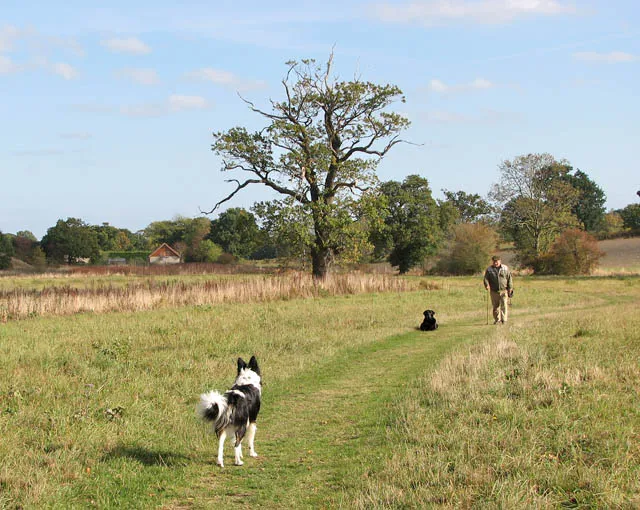
Photo: Evelyn Simak, CC BY-SA 2.0, via Wikimedia Commons
Your winter walk starts before the boot goes on. Not with the lead, but with a two-minute check of the rules that apply to the ground under your dog's paws. In the UK, dog access is not one national rulebook. It is a patchwork of council orders, byelaws, landowner conditions and seasonal signs. The good news: once you know where to look, it takes less time than finding a parking space.
Winter Lifts Some Bans, Not All of Them
Plenty of beach restrictions run from 1 May to 30 September, which means an autumn or winter walk can suddenly include sand, salt air and a very happy dog. But do not assume 1 October is a free-for-all. Some councils keep year-round exclusions on particular beaches or nature reserves. Some have smaller seasonal windows. Some allow dogs but require leads near nesting birds, slipways or promenades. And a few have rules that apply only to certain sections of a beach, not the whole bay.
That is why 'the beach is open to dogs in winter' is not a safe general rule. The safe rule is: check the specific beach, on the specific council website, for the specific dates.
PSPOs in Plain English
Public Spaces Protection Orders, usually shortened to PSPOs, are one of the main tools councils in England and Wales use to set local dog rules. They can require dogs to be on leads in named areas, exclude dogs from specified spaces, limit how many dogs one person can walk, or ask owners to pick up after their dog. The wording varies, and so do the maps.
In Scotland and Northern Ireland the legal labels differ, but the principle is the same: local rules and local signage matter. You do not need to memorise legislation to enjoy a walk. You need the schedule and map for your council's order, plus a sensible glance at the gate.
The Three-Check Routine
First, go to your council's website and search for the council name plus 'dog control PSPO' or 'dog walking rules'. Look for the current order, the map, the schedule of restrictions and the expiry date. Councils often bury this under parks, neighbourhoods, community safety or environmental health. If the page looks old, check the date on the order itself.
Second, read the order, not just the headline. Check which zones are covered, what the restriction actually is, whether it applies all year or only in season, and whether there are exemptions such as assistance dogs. Some orders specify lead length. Some apply only to dogs off lead. Some cover all dogs at all times.
Third, read the sign at the access point. A good sign should tell you the restriction and who made it. If the sign is faded, generic, missing or contradicts the council website, do not guess. Take a photo and ask the council's parks or neighbourhood team for the order reference.
Beaches Need a Date Check
Beach bans are where winter walkers get caught out most often. A council may list one beach as dog-friendly from October to April and another as no dogs all year. A third may allow dogs but ask for leads near the promenade. A fourth may have a restriction that runs from Easter to September, which moves with the calendar.
Check the council's beach list by name. Look for words like 'exclusion', 'lead-only', 'seasonal' and 'all year'. Then check access. A ban may be lifted but the car park, slipway or coastal path may still be closed after winter storms. A quick look at the council's parking and coast pages can save a wasted trip.
Lead-Only Does Not Mean Boring
If an order says lead-only, treat it as lead-only. A long line is brilliant for training, but it is not automatically the same as a lead in law. Some orders specify a fixed lead length; others simply require the dog to be on a lead. Read the wording and follow it.
A lead-only path can still be a good walk. Choose a route with sniffing opportunities, practise a loose lead, stop at benches and let your dog watch the world. The point is not to endure the walk until you reach the off-lead field. The point is to make the restricted section pleasant enough that nobody feels hard done by.
Private Land Has Its Own Rules
Council orders only cover council-managed land. National Trust, Forestry England, Woodland Trust, RSPB, MOD, water companies and farmers all set their own conditions. Some allow dogs everywhere; some ask for leads around livestock or wildlife; some exclude dogs from particular fields or buildings. Check the property page before you go, and read the car park noticeboard as well as the gate sign.
In Scotland, access rights are broader, but local byelaws and land management rules still apply. In all four nations, a sign saying 'dogs on leads' is usually there for a reason: livestock, ground-nesting birds, fragile habitats or busy visitor areas.
Build a Local Rules Note
Make a note on your phone for your regular patches. Include the council name, the order name and date, the beach or park dates, the lead-only zones and a contact number or email for the parks team. Photograph the signs at your usual access points. If you use a dog walker, share the note with them. If a friend is taking your dog out, send it on.
This is not bureaucracy for its own sake. It is how you keep access to the good sniffing spots. Councils are more likely to keep paths open to responsible owners than to argue with people who ignore clear signs.
If Something Does Not Add Up
Do not row with a warden at the gate. Ask politely which order applies and where it is published. Then check the council website yourself. If a sign has vanished or a map is unclear, email the parks or community safety team and ask for the order reference. Keep the reply.
Winter is a brilliant time to walk in the UK: fewer crowds, cooler dogs, better sniffing. A few minutes of checking the gate, the sign and the small print means you can enjoy it without a nagging worry in the back of your mind.