Your Dog Isn't a Demo Model: A Festive Briefing for Confident Visitors

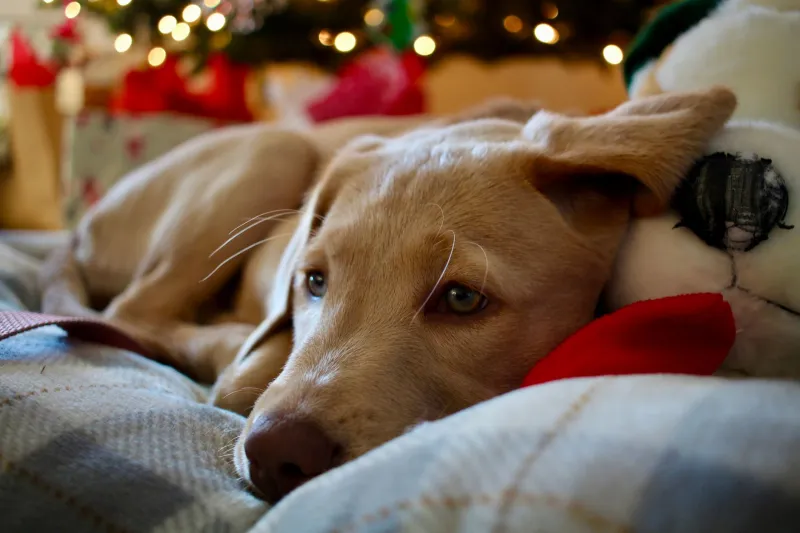
Photo by Photo by Eric Lau on Unsplash on Unsplash
Christmas visitors come with the best intentions and a lifetime of anecdotes about their own dog. That's lovely. It's also completely irrelevant to yours. Your dog has a particular history, a particular set of tolerances and a particular spot on the sofa that nobody else is allowed to occupy. Experience elsewhere doesn't transfer automatically, any more than knowing how to drive a hatchback means you can reverse a van into a tight spot.
So the briefing isn't about distrust. It's about translating your dog's small print into something a guest can act on before they're standing in the hallway with a suitcase, a bottle of wine and a firm belief that all dogs love a belly rub. Send it early. Keep it short. Make it sound like hospitality, not a risk assessment.
Send the brief before the doorbell
A text two days before arrival does more than a stack of corrections on the day. It sets the tone while everyone is still relaxed and nobody has had a glass of sherry.
Try something like: 'Really looking forward to Sunday. Quick heads-up so the dog and the kids all have a good day: please text when you're five minutes away and wait by the car while I get the dog settled. No treats from the table, but there's a jar of dog-safe biscuits by the kettle. The dog's bed is out of bounds, and the back gate needs to stay shut. None of this is about you — it's just how we keep things calm. See you soon.'
That's five instructions, one warm sentence and no lecture. It also gives your guest a job — text, wait, use the jar — which is much easier to follow than a list of things not to do.
The hallway is not a meet-and-greet
The front door is where festive visits go wobbly. Doorbells, carols, parcels, someone arriving early, someone else going out for a cigarette. For a dog, it's a relay of surprises.
Decide in advance where your dog will be when the door opens. That might be a lead in the hall, a baby gate across the kitchen, a crate with a cover and a radio on, or a settle mat in the front room with a long-lasting chew. None of these are punishments. They're traffic management.
Ask your guest to ignore the dog for the first few minutes. No baby voice, no outstretched hand, no direct stare. Let the dog choose to approach once the coats are off and the noise has settled. If your dog is happy to say hello, fine. If they'd rather supervise from a distance, that's fine too.
Christmas food: kind intentions, wrong snacks
Christmas is a minefield of raisins, sultanas, chocolate, mince pies, Christmas pudding, alcohol, onions, garlic, salty pigs in blankets and bones. A guest who slips the dog a bit of turkey skin thinks they're being generous. Your dog thinks it's Tuesday. Their digestion disagrees.
Make the rule simple: nothing from the plate, nothing from the table, nothing from a pocket. Put a jar of dog-safe treats by the kettle and say guests are welcome to give one — but only from the jar, and only when the dog has four paws on the floor. Keep the bin lid on. Move plates to the kitchen counter rather than the sofa arm. If someone wants to include the dog in Christmas dinner, build a separate dog plate in the kitchen: plain cooked turkey, a bit of carrot, no gravy, no stuffing, no pudding.
Children, dogs and the same patch of carpet
Children are often better at dog etiquette than adults, provided someone tells them the rules once. The usual failures are hugging, face-to-face staring, bothering a dog while it's eating and treating the dog's bed like a soft play area.
Give children a useful job instead: fill the water bowl, scatter a few treats on the lawn, help find the dog's lead. Teach them that a growl is information, not naughtiness. If the dog walks away, that's a polite no. If the dog is asleep, let them sleep. Supervise the room, not just the child.
Exits, gates and the great escape
Guests go out for fresh air, phone calls, car trips and the boot. Every one of those is an opportunity for a dog to slip past a hip-height gap in attention.
Put a spare lead by the door. Ask guests to close the door behind them and not to let the dog out for a wee unless you've said so. Check the garden gate latch before the visit and again after dark. If your dog is a flight risk, use a house line during high-traffic moments. It's not a lack of trust in your guest; it's a lack of faith in the average human's ability to close a door while holding a casserole dish.
Keep it short and keep it warm
Five rules is plenty. Doorbell, food, children, exits, quiet time. Put them in a text, say them with a smile, and repeat them once on arrival. The guest who knows dogs will understand. The guest who doesn't will be glad someone told them before they offered your dog a chocolate coin and a firm handshake.